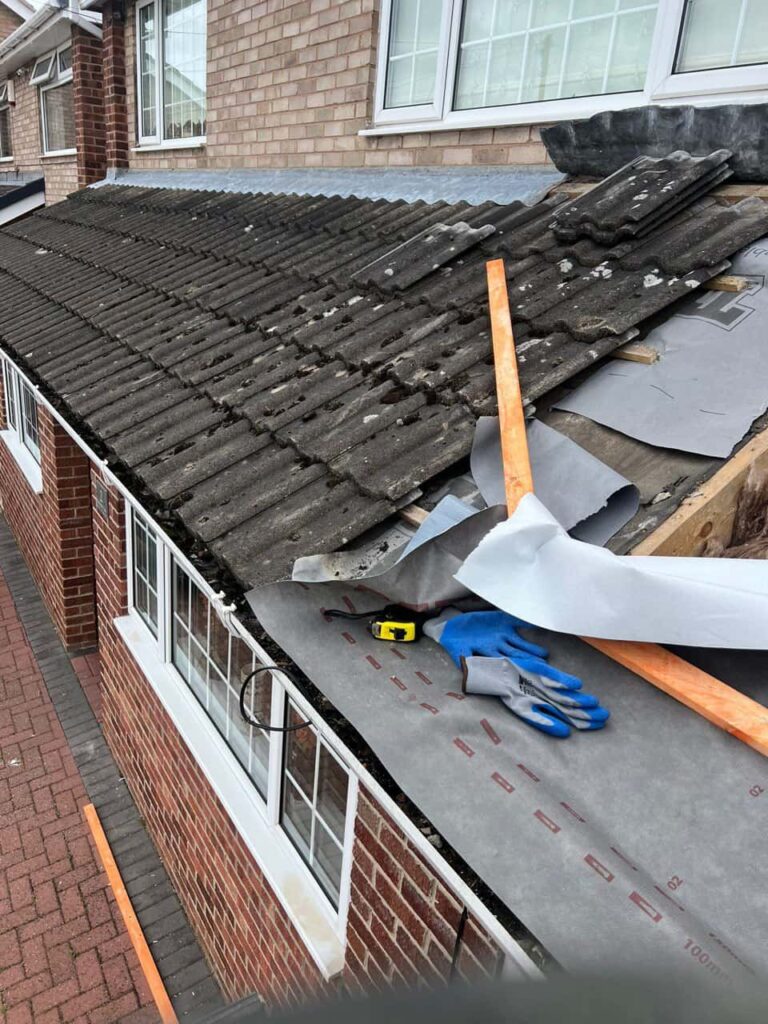
A single slipped roof tile may appear to be a minor defect, particularly when the rest of the roof looks intact and no water is visible inside the property. However, every tile forms part of an overlapping system designed to direct rainwater safely towards the guttering. Once one tile moves out of position, that system is interrupted.
For homeowners in Hucknall, Nottingham, prompt inspection can determine why the tile slipped, whether the surrounding materials remain sound and what repair is needed to prevent the defect from spreading.
How One Slipped Tile Can Affect the Wider Roof
The seriousness of a slipped tile depends on its position, the condition of the underlay and battens, and the length of time the defect remains exposed. Not every displaced tile causes extensive damage, but leaving it unresolved increases the likelihood of further problems.
The Gap Can Allow Water Beneath the Covering
Roof tiles shed water by overlapping one another. When a tile slips, it can expose the underlay and create a route for wind-driven rain to enter beneath neighbouring tiles.
The underlay may provide temporary protection, but it is a secondary barrier rather than the main roof covering. If it is torn, brittle or already deteriorated, water may pass into the roof space.
An internal leak may not appear immediately because moisture can be absorbed by insulation or travel along the roof structure before reaching a ceiling.
The Underlay Can Deteriorate Once Exposed
Underlay is normally protected from direct sunlight, wind and rain. A gap in the tiles leaves it exposed to conditions it was not designed to withstand continuously.
Over time, the material can weaken or tear. Once this happens, even a small amount of rain entering through the tile covering may reach battens, rafters, insulation and internal finishes.
Repairing the tile early helps restore the underlay’s protection before it becomes a separate problem.
Battens May Become Damp or Weakened
Roof tiles are supported by timber battens. If water repeatedly reaches them, the timber can remain damp and gradually lose strength.
A weakened batten may no longer hold the original tile or support the surrounding covering correctly. This can allow additional tiles to move, changing a local defect into a larger area of instability.
The condition of the batten should therefore be checked rather than simply pushing the tile back into position.
Nearby Tiles Can Lose Support
Tiles work together through their alignment, overlap and fixings. One displaced tile may disturb those beside it or expose their edges to greater wind pressure.
Strong gusts can then lift adjacent tiles, particularly where their fixings are already corroded or their supporting battens have deteriorated. Several tiles may eventually become loose even though only one appeared defective at first.
A professional inspection should include the surrounding area to identify any early movement.
Water Can Travel Away From the Original Defect
The position of an indoor damp patch may not correspond with the slipped tile. Water can run along underlay, rafters or battens before dripping into the property elsewhere.
This can lead to repair work being directed towards the area above the visible stain rather than the true entry point. Accurate leak detection considers the route the water may have taken through the roof.
Possible internal signs include:
- Ceiling discolouration
- Peeling or bubbling paint
- Damp insulation
- Dark marks on roof timbers
- A musty smell in the roof space
- Dampness close to an external wall
- Water marks that worsen after rainfall
The Cause May Indicate a Wider Weakness
A tile can slip because of an isolated broken fixing, but it may also reveal deterioration affecting a broader section of the roof.
Common causes include:
- Corroded nails or failed clips
- Broken tile nibs
- Deteriorated battens
- Strong wind uplift
- Movement within the roof covering
- Previous repairs that have become loose
- Age-related failure of several fixings
If nearby tiles were installed at the same time and have experienced the same conditions, they may contain similar weaknesses.
A Loose Tile Can Fall Completely
A slipped tile may continue moving during wind, rain or vibration. It can slide further down the roof, damage lower tiles or fall from the building.
The area beneath a visibly loose tile should be avoided until it has been assessed. Homeowners should not attempt to climb onto the roof, as displaced materials can make access unsafe.
When Does the Problem Need Prompt Attention?
All slipped tiles should be checked, but the situation becomes more urgent when:
- The underlay is visibly exposed or torn
- Rain or strong winds are expected
- Several neighbouring tiles appear uneven
- Damp marks have developed indoors
- The tile is close to a valley, chimney or roof edge
- Pieces of tile or mortar have fallen
- Water is entering the property
- The tile appears likely to fall
Early inspection can often keep the required work localised.
What Should a Professional Repair Include?
A proper repair should address both the displaced tile and the reason it moved. Depending on the findings, the work may involve repositioning or replacing the tile, renewing its fixing and repairing the batten or underlay beneath it.
The roofer should also check:
- Adjacent tiles and their alignment
- Nails, clips and tile nibs
- Supporting battens
- The condition of the underlay
- Nearby flashings and roof junctions
- Signs of moisture within the roof space
This wider assessment reduces the chance of another tile slipping soon afterwards.
Do Not Wait for a Visible Leak
A roof defect can affect concealed materials before water appears inside the home. Waiting for a ceiling stain may allow moisture to spread through insulation or timber.
When a slipped tile is repaired promptly, the work may remain limited to one small section. Delaying the inspection gives water and wind more opportunity to enlarge the defect.
Conclusion
A single slipped roof tile can lead to a larger roofing problem if it exposes the underlay, allows water to reach the battens or causes neighbouring tiles to lose support. Although the damage may initially be localised, it should not be ignored simply because the roof has not started leaking.
Hucknall Roofing Repairs provides professional slipped tile and roof repair services throughout Hucknall, Nottingham. If you have noticed a tile out of position, contact us to arrange an assessment and identify the appropriate repair before the problem spreads.
Call us on: 0115 647 1193
Click here to find out more about Hucknall Roofing Repairs
Click here to complete our contact form and see how we can help with your roofing needs.